
Life in Motion: Stretching – Why Flexibility Matters for Every Part of Your Body
Have you ever bent down to tie your shoes and felt your hamstrings pull? Or reached for something on a high shelf only to realize your shoulders just don't move like they used to?
Many people assume stiffness is simply a normal part of getting older. The truth is, our bodies become stiff because we stop moving them through their full range of motion—not just because we age.

Stretching is one of the simplest and most effective ways to keep your body moving the way it was designed to. It doesn't require expensive equipment, a gym membership, or hours of your day. Just a few minutes of regular stretching can help maintain flexibility, improve posture, reduce muscle tension, and make everyday activities easier.
Stretching isn't just for athletes—it's for anyone who wants to continue enjoying life without unnecessary aches, stiffness, and limited movement.
What Is Flexibility?
Flexibility is the ability of your muscles, tendons, and joints to move comfortably through their full range of motion.
Think of your body like a rubber band. A new rubber band stretches easily and returns to its original shape. Leave it unused for years, and it becomes dry, stiff, and more likely to snap. Your muscles behave similarly.
Without regular stretching and movement, muscles gradually shorten, connective tissues become less elastic, and joints lose mobility. Eventually, simple movements become more difficult.
What Happens When You Don't Stretch?
When flexibility decreases, your body begins to compensate.
Instead of bending with your hips, you may round your back.
Instead of turning your neck, you rotate your entire body.
Instead of squatting to lift something, you bend awkwardly from your waist.
These compensations place extra stress on muscles, joints, ligaments, and even the spine.
Over time, poor flexibility may contribute to:
Muscle tightness
Joint stiffness
Poor posture
Reduced balance
Limited range of motion
Increased risk of muscle strains
Difficulty performing everyday activities
Increased fatigue from simple movements
Many people don't realize they've lost flexibility until daily tasks become difficult.
Neck
Modern life often keeps our heads tilted forward while using phones, tablets, and computers. Without stretching, the muscles around the neck gradually tighten.
This may lead to:
Neck stiffness
Reduced ability to turn your head
Muscle tension
Increased stress on the cervical spine
Tension headaches in some individuals
Keeping the neck flexible helps you safely check blind spots while driving, look over your shoulder, and maintain better posture throughout the day.
Shoulders
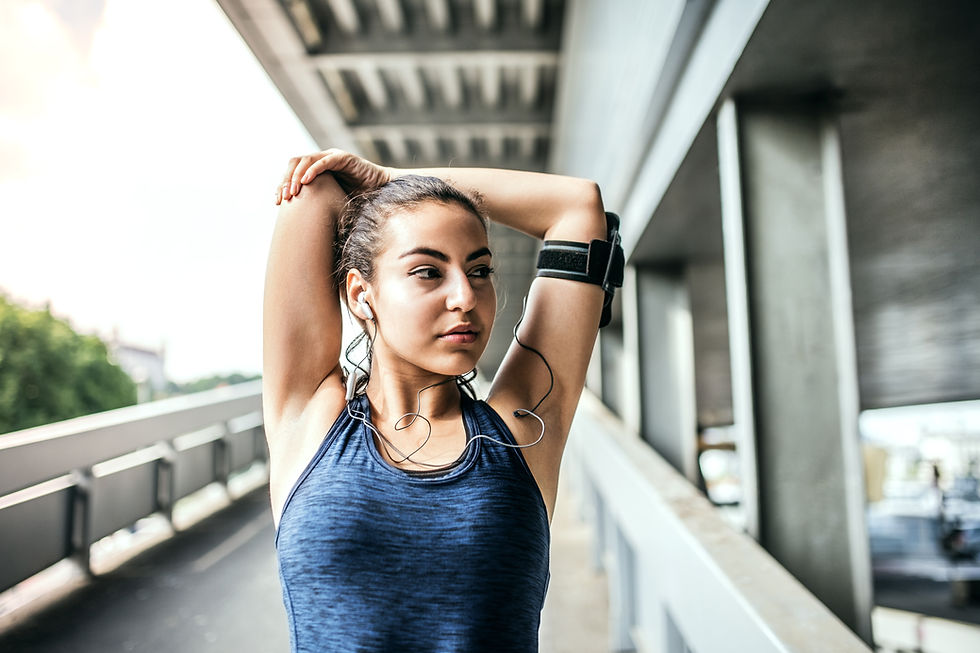
Your shoulders are among the most mobile joints in your body.
That mobility requires flexibility.
When shoulder muscles become tight, everyday activities such as:
Washing your hair
Putting on a jacket
Reaching overhead
Lifting grandchildren
Carrying groceries
can become surprisingly difficult. Regular stretching helps preserve comfortable shoulder motion.
Chest
Hours spent sitting often shorten the chest muscles. As they tighten, they can pull the shoulders forward, contributing to rounded posture.
Stretching the chest helps:
Improve posture
Open the shoulders
Allow easier breathing
Reduce muscular tension across the upper body
Upper Back
Many people think their upper back feels "tight." Often, surrounding muscles have become stiff from prolonged sitting.
Stretching the upper back encourages better mobility between the shoulder blades and promotes healthier movement throughout the spine.
Lower Back
The lower back often becomes sore because nearby muscles are tight. Limited flexibility in the hips, hamstrings, and hip flexors increases stress on the lumbar spine.
Stretching these surrounding muscles may reduce unnecessary strain during everyday movement.

Hips
Your hips are responsible for walking, standing, climbing stairs, bending, and maintaining balance. Sitting for long periods shortens the hip flexor muscles.
Over time this may cause:
Tight hips
Poor posture
Shortened walking stride
Lower back discomfort
Reduced balance
Flexible hips help your entire body move more efficiently.
Hamstrings
Tight hamstrings are extremely common.
They may make it difficult to:
Bend forward
Pick things up
Sit comfortably
Walk normally
Exercise
Because the hamstrings attach to the pelvis, tightness can also affect pelvic position and increase stress on the lower back.
Quadriceps
The muscles on the front of your thighs help you stand, walk, climb stairs, and rise from a chair. Keeping them flexible improves knee movement and helps maintain normal walking mechanics.

Calves and Ankles
Flexible calf muscles allow your ankles to move properly while walking.
Without enough flexibility you may notice:
Shorter steps
Reduced balance
Difficulty squatting
Increased stress on the knees
Healthy ankle mobility becomes increasingly important as we age because it contributes to balance and fall prevention.
Wrists and Forearms
Typing, texting, gripping tools, and repetitive work can tighten the muscles of the hands and forearms. Stretching helps maintain comfortable movement for daily activities like writing, cooking, gardening, and using a computer.
Stretching Helps You Stay Independent
Many people think stretching is about touching their toes. It's actually about maintaining independence.
Flexibility makes everyday activities easier, including:
Getting dressed
Reaching into cabinets
Walking the dog
Gardening
Carrying groceries
Playing with children or grandchildren
Climbing stairs
Getting in and out of the car
Sleeping more comfortably
The better your body moves today, the more freedom you'll have tomorrow.
How Often Should You Stretch?
The American College of Sports Medicine recommends flexibility exercises for all major muscle groups at least 2–3 days per week, although daily stretching often provides the greatest improvement in flexibility.
General guidelines include:
Warm up before stretching with light activity.
Stretch until you feel gentle tension—not pain.
Hold each stretch for 15–30 seconds.
Repeat each stretch 2–4 times.
Breathe normally throughout the stretch.
Never bounce during a stretch.
Consistency matters much more than intensity.
Five to ten minutes each day can produce meaningful improvements over time.
Stretching You Can Do at Home
The good news is that improving flexibility doesn't require special equipment.
Simple stretches performed at home can help maintain mobility throughout your entire body.
Examples include:
Neck stretches
Chest doorway stretch
Shoulder cross-body stretch
Cat-Cow stretch
Hip flexor stretch
Hamstring stretch
Calf stretch
Read our step-by-step guide with pictures and instructions:
Small Habits Lead to Big Results
You don't need to become a gymnast to benefit from stretching. The goal isn't extreme flexibility. The goal is maintaining enough flexibility so your body continues to move comfortably throughout your life.
Every stretch is an investment in your future mobility.
Start with just a few minutes today.
Your body will thank you tomorrow.
References
American College of Sports Medicine. ACSM's Guidelines for Exercise Testing and Prescription.
American Academy of Orthopaedic Surgeons. Stretching and Flexibility Exercises.
Harvard Medical School. Stretching: Focus on Flexibility.
National Institute on Aging. Exercise and Physical Activity Guide.
American Physical Therapy Association. Flexibility and Mobility Resources.


Comments