4414 Florida National Dr., Lakeland, Fl 33813

Sciatica Relief Through Chiropractic Care
If you’re experiencing pain that starts in your lower back and travels into your hip, leg, or foot, you may be suffering from sciatica. Sciatica is not just back pain — it is a nerve condition caused by compression or irritation of the sciatic nerve, the largest nerve in the body.
The sciatic nerve begins in the lower spine, travels through the pelvis and hips, and runs down each leg to the feet. When this nerve becomes irritated, inflamed, or pinched, it can create pain, numbness, weakness, or burning sensations that affect your ability to walk, sit, sleep, or work comfortably.
What Causes Sciatica?
Sciatica occurs when something puts pressure on the sciatic nerve
as it exits the spine or travels through the hips. This pressure
disrupts normal nerve signals and creates pain that radiates down the leg.
Common causes include:
-
Herniated or bulging discs
-
Spinal misalignments (subluxations)
-
Degenerative disc disease
-
Spinal arthritis or bone spurs
-
Tight or inflamed muscles (especially the piriformis)
-
Pelvic or hip misalignment
-
Injuries from car accidents, falls, or sports
-
Prolonged sitting or poor posture
When the spine or pelvis is not properly aligned, the sciatic nerve
becomes irritated, leading to inflammation, pain, and reduced mobility.
Common Sciatica Symptoms
Sciatica can affect one or both legs, but usually appears on one side. Symptoms may include:
-
Sharp, shooting pain from the lower back into the buttock and leg
-
Burning or electric-like pain
-
Tingling or pins-and-needles
-
Numbness in the leg, foot, or toes
-
Muscle weakness
-
Hip pain or tightness
-
Pain that worsens when sitting, bending, or coughing
-
Difficulty walking, standing, or sleeping
Many patients describe sciatica as feeling like a hot wire or deep ache running down the leg.
Why Sciatica Doesn’t Go Away on Its Own
Pain medications may temporarily reduce discomfort, but they do not fix the underlying problem. If spinal joints are misaligned or a disc is pressing on the nerve, the irritation continues. Without proper care, sciatica can become chronic and lead to long-term nerve damage or recurring flare-ups.
How Chiropractic Care Treats Sciatica
Chiropractic care addresses the root cause of sciatic nerve compression by restoring proper alignment and motion to the spine and pelvis.
Chiropractic treatment helps by:
-
Reducing pressure on the sciatic nerve
-
Correcting spinal misalignments
-
Improving joint mobility
-
Relaxing tight muscles
-
Increasing blood flow and healing
-
Restoring normal nerve function
When pressure is removed, the nerve can heal naturally, allowing pain, numbness, and weakness to improve.
Exercises That Support Sciatica Recovery
When combined with chiropractic adjustments, targeted exercises help stabilize the spine, reduce muscle tension, and prevent future flare-ups.
The McKenzie Method is frequently used to significantly relieve sciatic pain and promote faster recovery.
Full Cobra Pose
Increases lumbar extension and nerve space.
Push up through your hands while keeping hips on the floor.
Hold 10–30 seconds. Repeat 5–10 times.
Half Cobra Pose
Reduces disc pressure and improves spinal motion.
Lie on your stomach and prop up on your elbows.
Hold 10–30 seconds. Repeat 10 times.
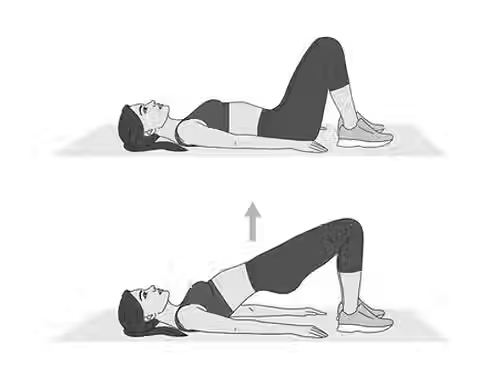
Glute Bridge
Strengthens the glutes and stabilizes the pelvis.
Lie on your back with knees bent. Lift your hips,
squeezing your core and glutes.
Hold 2–10 seconds. Repeat 5–10 times.