
Chronic Headaches: When Is a Headache More Than Just a Headache?
Updated: Aug 20
Most people experience a headache from time to time. Maybe you didn't get enough sleep, spent too many hours looking at a computer screen, skipped a meal, or had a particularly stressful day.
But what happens when headaches become frequent, more intense, or start to feel different from what you've experienced before?
A recurring headache shouldn't automatically be dismissed as "just a headache." While many headaches are related to common issues such as muscle tension, stress, or migraine, some headaches can be a sign that something else needs to be evaluated.

Common Types of Headaches
Headaches can have many different causes, and not every headache is the same.
Tension Headaches
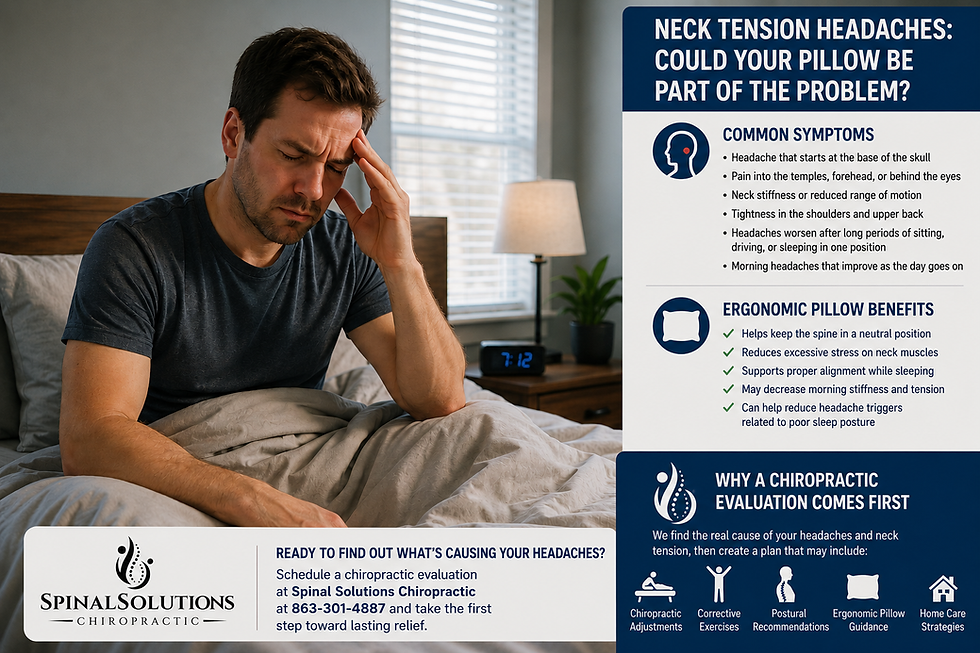
Tension-type headaches are among the most common forms of headache. They may feel like pressure, tightness, or a dull ache around the forehead, temples, or back of the head.
Muscle tension involving the neck, shoulders, and upper back may contribute to some headaches, particularly when combined with prolonged sitting, poor posture, stress, or repetitive activities.
Migraine Headaches
Migraines can be much more than a severe headache. They may involve throbbing or pulsating pain and can be accompanied by nausea, vomiting, and sensitivity to light or sound.
Some people experience an "aura" before or during a migraine. This can include visual disturbances, such as flashing lights or blind spots, as well as other neurological symptoms.
Because migraine symptoms can vary considerably from person to person, recurring or disruptive headaches should be discussed with an appropriate healthcare professional.

When Should a Headache Concern You?
A headache that is unusual for you deserves attention.
Seek emergency medical care for a sudden, severe headache—especially one that reaches maximum intensity very quickly—or a headache accompanied by symptoms such as:
Confusion or difficulty understanding speech
Fainting or loss of consciousness
Weakness, numbness, or paralysis
Difficulty speaking or walking
Vision problems
A stiff neck or high fever
Significant or unexplained vomiting
A headache that feels like the worst headache you've ever experienced
These symptoms can sometimes be associated with serious medical conditions and should not be evaluated solely as a musculoskeletal problem.
You should also schedule an evaluation if your headaches are becoming more frequent, more severe, interfere with your normal activities, or are no longer responding to your usual approach.
Could Your Neck and Muscles Be Contributing to Your Headaches?
Once serious causes have been ruled out, it can be helpful to look at the musculoskeletal factors that may be contributing to recurring headaches.
The neck, shoulders, and upper back work together every day. Prolonged computer use, extended phone use, repetitive activities, stress, and certain postural habits can place additional demands on these areas.
For some people, headaches may be associated with problems originating in the neck. These are sometimes referred to as cervicogenic headaches.
A thorough examination can help determine whether your headache pattern may have a musculoskeletal component.
Can Chiropractic Care Help With Headaches?
Chiropractic care may be appropriate for some people with headaches, particularly when a musculoskeletal component is present.
Research suggests that spinal manipulation may help reduce the frequency and intensity of cervicogenic headaches. Some research has also found potential benefits for migraine, although the evidence is not conclusive and results vary between studies.
At Spinal Solutions Chiropractic, the goal isn't simply to treat the location where you feel pain. We look at the relationship between your symptoms, spinal movement, muscle function, posture, and other relevant factors.
Depending on your individual situation, care may include chiropractic adjustments, soft-tissue or muscle work, movement recommendations, and exercises designed to support better function.
If your examination suggests that your symptoms may require medical evaluation, referral to the appropriate healthcare professional may be recommended.
Don't Ignore a Recurring Headache
Taking an occasional headache seriously doesn't mean assuming the worst. It means paying attention to changes in your symptoms.
Ask yourself:
Are my headaches becoming more frequent?
Are they becoming more intense?
Do they feel different than they used to?
Are they interfering with work, sleep, or everyday activities?
Do I also have neck or shoulder tension?
Did my headaches begin after an injury or accident?
Am I relying on medication more often to manage them?
If you answered yes to any of these questions, it may be time to have your symptoms evaluated.
A Headache Is a Symptom—Find Out Why
Headaches can have many different causes. The important first step is determining whether your symptoms require medical attention and, when appropriate, identifying whether musculoskeletal factors may be contributing to the problem.
If you are experiencing recurring headaches along with neck or shoulder discomfort, Spinal Solutions Chiropractic in Lakeland, Florida, can evaluate your condition and determine whether chiropractic care may be appropriate for you.
Don't simply learn to live with recurring headaches. Get your symptoms evaluated and take the next step toward understanding what may be contributing to them.
1"Hospital Treats Headache Suffers". The New York Times, 12/25/88.
2Source: National Headache Foundation - www.headaches.org3Source: Yale Medical Group - www.ymghealthinfo.org


Comments